Showing posts with label Ogden Nash. Show all posts

Monday, April 15, 2024

SOMETHING ABOUT A MARTINI


A friend of mine, admittedly an American friend who perhaps had unreasonably high expectations, went into the bar at Euston station recently and asked the barman for a Martini.  He didn’t know what that was or how to make it, so my friend settled for a negroni, which was within the barman’s wheelhouse.


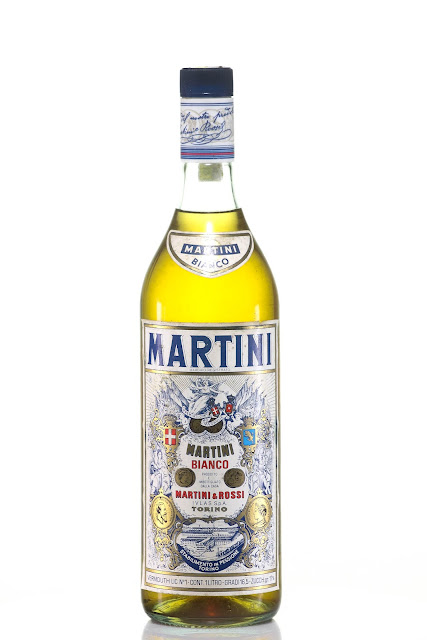
I think she was lucky that he didn’t just pour her a glass of ‘Martini.’  For many, many years very few people in England knew what a martini was, but they’d heard of Martini Bianco which was, and is, the trade name of a brand of vermouth made by Martini and Rossi.  I’ve always wondered whether they were deliberately trying to cause confusion.


And then last week in the Times, in the Comment section, Rose Wild (possibly her real name) quoted from an essay published in the Times in the summer of 1914, titled ‘Thoughts on Drink.’ The relevant passage runs ‘A wise man of the world has laid down as a law of universal application that “Whenever you want a drink and don’t know what drink it is that you want, what you want is vermouth."’


I suppose there must have been one or two occasions when I didn’t know what drink I wanted, but it’s a rare thing; and just as rarely have I ever wanted a glass of vermouth.


We come back, as so often, to the first verse of Ogden Nash’s poem, ‘A Drink With Something in It.’


There is something about a Martini,
A tingle remarkably pleasant;
A yellow, a mellow Martini;
I wish I had one at present.
There is something about a Martini,
Ere the dining and dancing begin,
And to tell you the truth,
It is not the vermouth—
I think that perhaps it's the gin.


How right he is.  It’s not, it’s never, the vermouth.

Thursday, December 5, 2019

A DRINK WITH MANY THINGS IN IT


If you’re like me, by which I mean (among other things) not Canadian, you may not be familiar with the taste, the look or even the name of Labrador Tea, Nordic Juniper, Crowberry, or Cloudberry. These are Canadian Botanicals, and now, to a strictly limited extent, I’m familiar with all of them.  These along with some other things – Wild Rose Hips and something called Artic Blend - are ingredients in Ungava Canadian Premium Gin.


There was a little cardboard sleeve around the neck of the bottle I bought, telling me about those botanicals, along with some tiny black and white images.  Here they are in colour: see if you can tell which is which. 


Ungava is, apparently, an Inukitut word meaning ‘towards the open water’ and Ungava was a district in the Northwest Territories subject to changing boundaries and administrative status.  It no longer exists as far as I can tell, though there’s still an Ungava Bay.


The gin is incredibly yellow – hence a prime candidate for ‘a yellow, a mellow martini’ (per Ogden Nash) even without vermouth.


Though, just in case, Ungava also make a Vermouth called Kayak.  It contains, you guessed, Canadian botanicals.


Tuesday, April 11, 2017

GIN AND MOI

I’ve been thinking about gin.  Partly that’s because I’ve been drinking a fair amount if it lately, but not only for that reason.


It started when I was drinking gin in Vienna in the Blue Bar at the Hotel Sacher, which actually looks even more blue than the picture below:


 I had a Gibson martini made with Wien gin, it looked like this:


At the time I didn’t know what Wien gin was, but I think it was probably this:


The Blue Bar made a good martini, even if I could have wished the glass a bit fuller, but those cocktail onions were the real revelation, sweet and mild, a million miles away from the vinegary sourness that goes with so many cocktail onions.


And then there was Das Torberg die Bar – a bar that stocks 200 gins supposedly.  I ordered the Gansloser Black Gin - that's the bottle above - which (call me naïve) I had expected to be black in color but looked just like any other gin.  Tasted very  fine though.


We asked the lady behind the bar about Wien Gin and she served a couple of slugs of this stuff:


Which is certainly Viennese gin, though not the same brew as at the Blue Bar, and again perfectly good, and again I could have used a heavier pour.


And last weekend, in Palm Springs, I had an “Honest Gin Martini” at Mr. Lyons in Palm Springs – (it used to be Lyon’s English Grille, but has evidently gone native).  And yes it lived up to its name.


But here’s the thing I’ve been thinking: gin, as I understand it, is essentially flavored vodka.  At the very least it has to be flavored with, and preferably fermented with, juniper but the basic process and the basic stuff is the same.  Now, if you look at the list of ingredients on any of the fancier gins you’re likely to see they contain licorice, nutmeg, cumin and whatnot: these, along with a dozen or so others go into Citadelle gin, which is French, and which I think is a very good ‘un.


But here’s what I don’t get: licorice, nutmeg, cumin and whatnot are noticeably colored – yet commercial gin continues to be entirely clear.  What’s that about, then?

And I tried a little experiment.  One of my favorite gins at the moment is Death’s Door, made on Washington island in Wisconsin’s and according to the label “it’s crafted with 3 Botanicals” – juniper, coriander and fennel seeds: very simple and all things that can be found in the Psychogourmet test kitchen.


So I got some cheap and cheerful vodka and spruced it up with those three ingredients and put them in my Sempli Incanter – every home should have one if you ask me. 


Of course I don’t know what quantities the Death’s Door folk use (I think I overdid it on the fennel) but after a couple of weeks it tastes pretty decent if not exactly like Death’s Door, then a whole lot better than cheap and cheerful vodka.  It isn't actually as murky as it looks in the picture - there's condensation on the glass


But there’s no way in the world the end result is going to be clear, is there?

So what do the manufacturers do?  Do they re-distill it?  Is it just filtration?  Can you bleach liquids? I have no idea but somebody out there surely knows.

And I thought I should also throw into the mix: Ogden Nash’s well-known and perfect poem, “A Drink With Something In It,”


 See what I’m talking about – the martini celebrated here is yellow, (yellow I tells ya!) – not clear, and that’s surely because of the gin, not the vermouth.  Room for further discussion.  


And OK, here's some of the discussion right here, a Facebook post in response.  


Jonathan Taylor So my friend Darian Af, who makes gins various, says "... true gin isn't an infusion, it's a distillate. That means that whatever botanicals you want in your final product are added to a spirit and then the whole thing is distilled: it is brought to a high enough temperature that it begins to evaporate, then the vapor is collected and condensed back into liquid. So only the compounds that are volatile enough to evaporate (things like essential oils and alcohol) end up in the final product. Those compounds tend to be clear, though there may well be cases where some distillate has a color to it. I can't think of one offhand, though." which seems to be fairly clear/