Thursday, August 23, 2018

SWIFTLY FLY THE BEERS

   
Sometimes a man has to search long and hard before he finds the drink that entirely suits and expresses his personality.  Other times he just wanders into a Japanese supermarket and buys a beer, pretty much at random, and it gets him to a t.
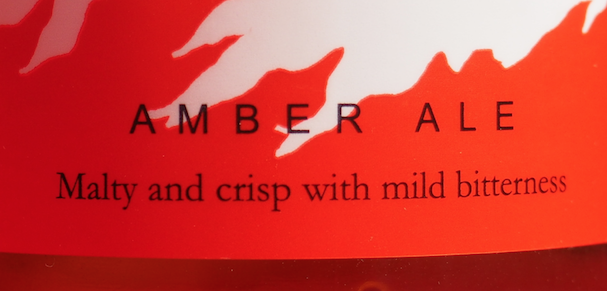
And so it proves with Kawaba Sunrise Ale, or at least with the words on the label, in small print 


I’ll take a pass on the “malty and crisp” but “with mild bitterness” - hell yeah - that’s me all over.
Kawaba Sunrise Ale, c’est moi.


Monday, August 20, 2018

WHERE IS YOUR LUSTRE NOW?

I was thumbing through an old copy of Gastronomica magazine and came across this staggeringly fine ad for Tryphosa jelly dessert.  


I had never heard of Tryphosa which apparently is also the name of a woman in the Bible, but the spelling is alarmingly close to Typhosa, which is a form of salmonella.  I suppose people worried less about salmonella back then.

The Tryphosa ad is in fact so great, shining with the light of Liberty, that it’s hard to imagine the taste could possibly live up to it.  Compare and contrast with the aesthetic aspirations of the current Jell-O pack.  Not so much to live up to there.


And I did find ads for a jelly dessert named Bromangelon (which sounds like a bromance between cro-magnons). Their use of imagery was more modest still. 


The fact is, when it comes to jelly, presentation means a lot.  When I was growing up, we had jelly all the time, although my mother only approved of strawberry flavor, and she made it in a Pyrex mold much like the one used in the Bromangelon ad and as seen below.  She never tried to unmold it, and present it freestanding. I assume she’d tried at some point, possibly before I was born, and she’d had more than enough failures.


         Of course the Pyrex was the problem, glass being a poor conductor of heat, so the classic move of dipping the mold in hot water to free the jelly inside wasn’t going to do much good.

I’ve been sniffing around looking for exotic and eccentric jelly molds.  Bompas and Barr are the bosses of this kind of thing, but theirs are bespoke, and in the “if you have to ask, you can’t afford it” category.


I did find the one below, which has its appeal, but it might offend more people than it amuses, even if you could say it’s an allusion to La Grand Bouffe.


I guess the real problem with jelly molds, as with my brain version below, is that they're amusing once, but only once.


But I did find one (I mean I found pictures of it online, it seems you’re unlikely to find one in the real world outside of a museum) that might be entertaining for quite a while


It’s a Wedgewood jelly mold in the shape of an obelisk.  What you’re seeing there is an an outer form and an inner core.  The latter sits inside the former, and you fill the mold with clear jelly – it has to be clear to show the pattern.  I think it might take quite a while to get bored with that.


Saturday, August 18, 2018

MORE SPUD LORE

So I went back to Franklin and Company to have their waffle cut duck fries.  They were good, although you could easily have imagined something gamier and more duck-intense.  I suppose I was thinking of goose fat, which I know costs more than duck fat, though I’m not entirely sure why: roast yourself a goose and the fat just pours out - enough to   satisfy most of your fat needs for at least the next year.


Even so, it’s really it’s all about the potatoes, and my idea for a grand and quixotic book titled something like The Secret Life of the Spud hasn’t been completely abandoned.  And so, being the freewheeling researcher that I am, I Googled “potato+porn.” In a world of “food porn” and “ruin porn” I thought this might be quite innocent, and in the main it was.  

There’s even a (rather neglected) tumblr site:  
http://potatopornpotatoporn.tumblr.com
It has very few words, though there are links to recipes and pictures like this one:


But the world being as it is, my googling also brought up quite a few pictures (more of men that of women) doing ill-advised things with potatoes – pretty much the opposite of eating them.  Here is a more decorous image (which I suppose is actually selling the handbag), by James Piatt and Ted Walton, though those names took some finding.


And I did discover that there’s a (completely unpornographic) Potato Museum in Munich - Das Kartoffelmuseum.  I’ve been to Munich – how did I miss that?  In that museum they have one of these things:


       It’s a ceremonial vessel, dedicated to, possibly in the shape of,  "Axomama" – the Andean potato goddess.  There’s a lot to be said about these things, and The History and Social Influence of the Potato by Radcliffe Salaman says a fair amount: human sacrifice and mutilation of the upper lip seem to have been involved.

       It now seems that I might not get to the Idaho Potato Museum, after all, so here’s a picture of their prime exhibit, what they say is the world’s largest potato chip, measuring 25 inches across - though in fact as you can see, it’s actually a giant Pringle: 


Now I’d have thought Pringles were so “constructed” you could make them any size you wanted. Why stop at 25 inches? You could have one ten feet across.  But more than that, the Honorable Justice Warren, British High Court Judge, has declared that Pringles do not met the legal definition of a “potato crisp” at all, since they’re made from potato flour, corn flour, wheat starch and rice flour together with fat and emulsifier, salt and seasoning, with a potato content of a mere 42%.  Quite right, Judge.


Wednesday, August 15, 2018

STIRRING STUFF

I’ve been sifting through the Psychogourmet Archive and once again I saw this image which has been in the flies for a good few years.


It raises a lot of questions and I don’t have many of the answers, but it is, apparently, an image from a German propaganda leaflet titled Lightning News, dropped on Allied troops on the western front in 1944 – the leaflet is dated October 31st.


My source for this information is the website psywarrior.com and an article titled “Sex and Psychological Operations” by Herbert A Friedman.

But the questions I have relate to the original source of the image.  First, I wonder where it's an extant photograph or one taken specially for this purpose.  And I wonder if it's German or American.  It would be good if we could read the labels on the bottles but the online image isn’t high enough res.  In either case, if it was extant, where did it come from?  Who was the photographer?  Who was the model?  Was it perhaps a “dirty postcard” – the nudity is explicit, but certainly not obscene, the model looks very cheerful and that message “Gee, it would be swell to be back home and mix a few cocktails with her,” seems quite mild by propaganda standards.

So many wartime propaganda images show the decent girls back home being corrupted and ravished by various kind of scoundrel; and of course anxieties of class, nationality, and race often come into it.  This kind of thing:


The lady on the couch has been besmirched, and willingly at that, if the message on the rear is to be believed, although the barman is still shaking merrily in the background.  He may of course be in the woman's fantasy.

Poking around the internet, doing various word and image searches, has left me no wiser about that Lightning News photograph, but I did find this image, one of a number, of Bettie Page behind a bar - no cocktail shaker in use.  It's obviously post-war, the hostilities are over, and what model has ever looked more cheerful, and less corrupted, behind a bar or anywhere else, than Bettie Page? 


Thursday, August 9, 2018

IT'S ART (BUT IS IT FOOD?)

My pal Kevin Kinsella alerted me to a recent fad (I don’t think it’s quite a meme yet) on German Twitter where people are making sandwiches in the style of great visual artists.  Apparently it was started by a woman named Marie Sophie Hingst, with the hashtag #KunstGeschichteAlsBrotbelag. And others have joined in, as is the way with twitter.
Some are very literal indeed, just food cut into shapes to resemble works of art.   


But even before I clicked on the link Kevin sent me I was thinking of Mondrian and Rothko – and evidently so were others:


My own small addition to the genre is inspired by Carl Andre, top American minimalist, famous for his gridding, and it’s not a sandwich, but store-bought cheese tidbits arranged like this:


Of course, any work by Carl Andre would have been far more rigorous, far more geometrically precise, than my work, but then I suppose he wouldn’t have been using store-bought cheese tidbits


Monday, August 6, 2018

IT'S FOOD (BUT IS IT ART?)

Food photography, it’s a funny old thing isn’t it?
      Here’s a rather wonderful picture of the “Housemade Potato Chips - gorgonzola and calabrian chili dip, parmesan, black pepper” at Stella Barra Pizzeria on Sunset Boulevard, in Los Angeles.


I didn’t take that picture, although I was there, and I did eat some of the chips.  It was taken by Lisa Jane Persky who’s a "proper" and very accomplished photographer.  And I know that if I’d taken took a picture of those chips, they just wouldn’t have looked that good.
Here is what photographer Ellen Auerbach had to say on the subject: 


And here’s one I did earlier, when I was trying to become the “Cheese and pickle doostep sandwich” at The Royal Oak Inn, in Woodchester, Gloucestershire in England.  I guess I failed in my becoming.  On balance I think that was probably for the best.


Saturday, August 4, 2018

POTATO AMUSEMENTS

I’ve been thinking I might go on a road trip to Idaho next month, and I suppose I must have googled a few tourists destinations, but I was still surprised (to the extent that anything about the internet surprises me anymore), that The Idaho Potato Museum in the town of Blackfoot, came up on Facebook as a recommended page. I was already thinking I might go there but if Facebook recommends it  … well …


The museum’s Facebook page contains this image: 


It’s one that many of us have seen before, and it's there because the museum has been asked to verify whether this is a bona fide picture of an Idaho Potato Queen.  Alas they can neither confirm nor deny.
These models are easier to authenticate – 


They’re on the 2015 calendar for the Bavarian Farmers Association.  The cast includes Bavaria's then reigning "Potato Queen," Kathrin Schoderer. This is her apparently:


And here for comparison is a picture of Marilyn Monroe in a very well-tailored potato sack.  The image is available at the Idaho Potato Museum on a fridge magnet.


I would have thought that an erotic obsession with potatoes is one of the more minor paraphilias and yet, and yet …

        James Johnson was an Englishman who went on a 5 day drug binge with some friends, earlier this year, and was eventually arrested while wearing women’s underwear and filling a hotel bathtub with potatoes at the Travelodge in Eastleigh, near Southampton.

He was prosecuted not for potato or underwear offences but for possession of MDMA, 2CB, and 5-MAPB with intent to supply.   In court, the judge asked Johnson why he’d done it and Johnson replied: “It felt like the right thing to do at the time,” which I suppose is the only reason why anybody ever does anything ever, illegal or legal.

While images of Mr. Johnson remain elusive, I have been able to find a picture of the Travelodge in question.  


Tuesday, July 31, 2018

A PLATEFUL OF EUPHEMISM

I understand the need for euphemism in food, of course I do.  We speak of sweetbreads rather than pancreas, we say sausages rather than “unappealing bits of innards chopped up small, seasoned and stuffed into a length of intestine.”  
         And I can see why we don’t want to think about happy little calves when we’re eating our blanquette de veau. We want to dissociate the thing on the plate from the thing gamboling through the field.  The Simpsons covered this pretty well back in the day when they covered things pretty well.


But that doesn’t explain everything.  Part of the explanation is – the French.  After the Norman Conquest of England, high-toned French terms entered the English culinary vocabulary – so that it was a lamb in the field but mutton, as in mouton, when it got to the table.  It was a cow in the field but beef (boeuf) on the plate.

This seems okay as far as it goes.  But why doesn’t it apply to, say, rabbit, which did not become lapin, and chicken only in certain limited cases becomes poulet?  As for oysters and geese – huitres and oies - I suspect there was no change because most Anglophones wouldn’t have known know how to pronounce those words.

I also wonder if it had something to do with size – why bother giving a special name to something as small as a quail?  Or a pigeon which, as I understand it, is the same in both languages.

         The pig however seems a different problem again.  We’re told that the English pig became the Frenchified pork (from porc) – but why didn’t it become cochon?


 All this was going through my mind a week or so back when I was at Franklin and Company, a modest gastro-pubbish neighborhood joint in Los Angeles, and there on the menu was “The Pig Sandwich: Braised garlic pork, gruyere, charred broccolini, balsamic mustard, toasted ciabatta.”  I ordered it: it looked like this and it was pretty tasty:


It came with French fries, which were fine, but I could have substituted them for waffle-cut duck fries (not canard friesand it would only have been $3 extra, so now I think maybe I should have pushed the boat out just that little bit.

The restaurant is on Franklin Avenue in Hollywood, and it’s been through a few conceptual tweaks in its comparatively short history.  In the early days it had a version of this as its logo:


It’s a cartoon often, though not always, attributed to Benjamin Franklin, part of his campaign to remind the colonies that they had a better chance of standing up to the British if they were united rather than sliced into bite-sized chunks.

The restaurant doesn’t seem to use that logo anymore, and as far as I’m aware snake (or serpent as the French would say) was never on the menu, which I think is a shame.

Sunday, July 22, 2018

ALL THAT GLISTERS

The terrible news over the weekend was that the peerless food writer Jonathan Gold has died: a shocking surprise to most of us.

No doubt a lot of people who knew Jonathan much better than I did will be writing about him.  We didn’t see each other very often, but we’d eaten together, been at various events, exchanged emails from time, and I thought of him as a friend. I’m sure a great many did.


A few things to say immediately –

The best thing about his food writing - he wasn’t only interested in food – he knew and cared about music, literature, painting and much else besides, and it showed in his writing.

 He was wonderfully skilled at making you understand what a restaurant was actually like.  I’m not sure I ever read a really scorchingly bad review by him (though I know a few exist) and yet from his descriptions I absolutely knew there were some restaurants I’d never, ever want to go to.

I once asked him why he drove a big pickup truck, and he replied “Because I’m a  big man.”

Photo by the blessed Anne Fishbien
And finally, and forgive me if you’ve heard me say this before – he is the only Pulitzer Prize winner with whom I’ve ever shared a plate of pigs’ trotters.  The only one I’m ever likely to.  These are the trotters in question:

Friday, July 20, 2018

THE RIGHT STAUFFENBERG

Today, July 20th, as you may know, is the anniversary of the assassination attempt on Hitler, led by Colonel Claus von Stauffenberg, in 1944. The bomb plot failed, and Stauffenberg and several dozen military and conservative supporters were arrested, tortured and executed.

Now, you don’t need me to tell you that history can be used for any number of different purposes.  One the hand, since 1999, the swearing in of new recruits to the Bundeswehr – the united forces of Germany - takes place on July 20th to show that the military are entitled to resist immoral state actions and commands.

But Stauffenberg’s assassination attempt has also now (incredibly) been embraced by the far right, as a symbol of resistance, that Germany shouldn’t be controlled by “foreigners.”

There is also (I now know thanks to Susanna Forrest) a gin:


The advertising guff (below) suggests it invokes seeing "The Rite of Spring" for the first time in 1913, that was May 29th, though other dates and events may, of course, present themselves.


Wednesday, July 18, 2018

GIN AND I

It was, apparently, Gin Month while I was in England, and although you and I may think that every month in England is gin month, I suppose the marketing departments of liquor companies need to keep busy, and obviously they wanted June to be even more gin-sodden than the other months of the year.  I did what I could.

Not so very long ago the only place I knew in London where you could be sure of getting a good dry martini was the American Bar at the Savoy.  I’m not saying there weren’t other places, I just didn’t know them.  But the game has changed completely.  Bartenders all over the city now know what a dry martini is.  The days when they served you a glass of warm vermouth are passed.  And the Savoy endures.  Like this:


They make their house martini with Bombay Sapphire which, given the availability of a thousand and one artisanal, handmade, special edition gins, seems a little pedestrian but I had no objections to the taste.  However, should you have a 120 quid burning a hole in your waistcoat, you can turn to the “vintage cocktails” page of the drinks menu.


You’ll notice the presence of three cocktails using “vintage gin.”  Now, I don’t mean to spoil the party, but I’m not sure there’s any such thing as a vintage gin and I’ll tell you for why.
A friend of mine had an aunt and uncle who were happy and unrepentant alcoholics, and gin was their favorite drink.  As they approached retirement, and knowing they wouldn’t have much money to spend on booze once they’d stopped working, they filled the basement of their house with many, many crates of gin.  And when they retired they started to drink the first gin they’d laid down, which was now a couple of decades old, and they discovered that unlike whisky or brandy, gin did not get better with age, in fact it went off.  They ended up with a basement full of gin, most of which was undrinkable.  That’s the story anyway and it may not be 100 per cent true but the moral is clear:  drink your gin as soon as you get it.

Next stop was Dukes bar in the Dukes hotel in Mayfair.  This is where Ian Fleming drank – he lived close by – and they serve a Vesper which is a version of the martini Bond orders in Casino Royale.  He demanded Kina Lillet in his drink and Lillet can still be bought but they changed the recipe some years back.  So Dukes adjust their recipe accordingly - No. 3 London Dry Gin, Lillet Blanc, Angostura bitters, and Potocki vodka.


And this is the beauty part: the Dukes Vesper is neither stirred nor shaken but rather constructed tableside from ingredients that have come straight from the deep freeze.  If you like ritual you’re going to like this a lot.


And later a return to Mother’s Ruin in Walthamstow – a gin palace with, on the night I was there, the slowest bartender I’ve ever encountered.  He was Dutch, I think, and he said he was tired and he had to keep checking the drink recipes. It made you want to give him a good shake, although when the martini came it was perfectly fine.  Yep, that's a sage leaf.


And you know me, there are only two cocktails I really like: the martini and the gimlet and there it was on the Mother’s Run’s list – “Gimlet – Hendricks Gin, Ancho Reyes Verde chili liqueur, lime juice, gomme” - so I ordered one.  A different, far zestier bartender had swept into action.


The gimlet looked like this (yeah, I spilled some):


I think Raymond Chandler (and indeed I) would have preferred something a bit more translucent – and without a slice of cucumber - but it tasted very good.


And finally, because I was coming to the end of my time in London, I had a cocktail in Fitz’s bar at the Principal Hotel - the bar is named after Charles Fitzroy Doll who was the architect of the hotel and, among other things, designer of the dining room of the Titanic. 


Above is the Baby Babel made from “Tanqueray No. TEN Gin, Visciolata del Cardinale, LBV Port, Cream Sherry, Egg, Burr & Co. Coffee Ground Tincture.”  And of course I had no idea what “Visciolata del Cardinale” was, but research shows it to be a cherry dessert wine.  And frankly the whole thing tasted very much like dessert. But once in a while an alcoholic dessert in a glass goes down extremely well.  The bartender was absolutely wonderful.