Saturday, April 23, 2016

DUNKING FOR APPLES


So my drinking buddy and I went to happy hour at Wolf and Crane, a bar in Little Tokyo that has a convincingly Japanese feel without straining for it.  I think it has something to do with the wood.


The name, I assume, comes from Aesop’s fables – wolf gets bone stuck in throat, asks a nearby crane to help remove the bone, crane does so, then asks for a reward, wolf says,  “Be content. You have put your head inside a wolf’s mouth and taken it out again in safety; that ought to be reward enough for you.”

Something to think about as you survey the drinks list which features something called Wolf and Crane, which isn’t a cocktail as such, it’s a can of Sapporo and an unidentified (at least by me) Japanese whisky – which I always think is a pretty good way to drink both beer and whisky.


But they do real cocktails too, obviously, which are not noticeably Japanese.  The buddy started out with something called 1884 – a greyhound variant with added simple syrup.  It looked like this:


 I don’t know why it’s called the 1884, though I can think of reasons.   It was the year The Modern Bartender by O.H. Byron was published.  And the year this cocktail shaker was patented.

It was also the year of a peasants revolt in Japan – the Chichibu Incident, but I can’t swear that’s the origin of the name.  My buddy found the 1884 just fine - but he thought the glass was a bit girly.  So when he next ordered the Fiona Apple cocktail (yep, that’s what it’s called) - Mezcal, Fresh Lime Juice, Apple Spice, Bitters - he asked how it came. “In a bucket” said the bartender, which I thought was funny at the time though there might have been days when I wouldn’t have.  It came looking like this:


Anyway the drink tasted very fine – genuinely sweet and sour, citrus and apple, sharp and tangy and strong: and conceivably you might say it was the alcoholic equivalent of listening to a Fiona Apple song.  I wonder if Ms. Apple knows about it.  She’d probably like it.  We know she likes a drink and has a great sense of humor.


Monday, April 18, 2016

PORK ZEPPELIN

Having enthused about the Wurst of Lucky Peach, and having made some claims to be a sausage maker in my review, I reckoned it was probably time to make some more sausages.

As I’ve said before – there’s no mystery about sausage making.   You grind up some cheap meat, pork and turkey in this case:


You season it to taste - I generally under season rather than over season, so I went heavy on the garlic and paprika, but there's onion, cumin, black pepper and a few other things in there too:


You stuff it into a hog casing:


And voila you’re a sausage maker:


Admittedly all this is a lot easier when you have an electric meat grinder, as I now do, but I started out making sausages with a hand grinder, and it was much harder work, but arguably more satisfying for that very reason.
 
Two other bits of sausage lore surfaced while I was digging around.  First this vending machine that sells hotdogs.  I wish I knew more details:


 And then this startling bit of information which was in a New Yorker article about airships, though I’ve subsequently seen that the information has been circulating for a while.  The article runs: “The gas cells of many of the early zeppelins were made from so-called goldbeater’s skin: cow intestines beaten to a pulp and then stretched. It took two hundred and fifty thousand cows to make one airship. During the First World War, Germany and its allies ceased production of sausages so that there would be enough cow guts to make zeppelins from which to bomb England.”


This doesn’t seem to be a hoax, and I don’t want to contradict anyone.  On the other hand I’ve found the photograph below which I believe shows the inside of the Hindenberg, and it sure doesn’t look like cow guts.   Maybe I just don’t understand how the process of beating cow guts to a pulp turns it into a large skin.


I think it also raises the questions of why the Germans didn’t just make (or perhaps continuing making) their sausages using pig guts.  


Sunday, April 17, 2016

THE MASTER CUTLER


I went to the local Thai supermarket and bought some snacks.


The ones below were labeled "cuttlefish crackers” and a sticker on the back said they had nori/seaweed seasoning, and I assumed that was the speckles. but I didn’t think they tasted of seaweed, they just tasted of sugar, which I didn't much like.  Also they didn’t look at all like the picture on the pack, which I suppose is not uncommon in the world of food packaging but it still made me suspicious.  Not a hint of fishiness either.


These next ones were “cuttlefish crackers mix spicy.”  They were way less sugary, which was good, and the flavor was just hot in a blunt, broad spectrum kind of way.  Again, nothing I could identify as cuttlefish.


But then there were these, which are actually cuttlefish, “taotong roasted seasoned cuttlefish” to be precise – and they were actually quite good, savory, quite chewy, but again nothing that I could identify as obviously fish-like.


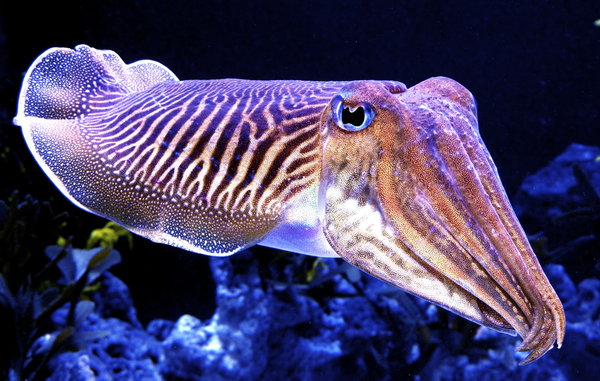
Maybe the problem is I don’t know what cuttlefish tastes like.  And until I researched it for this post, I didn’t have much idea what they looked like either.  Thus:


Tuesday, April 5, 2016

FOR BETTER AND WURST


It never rains: a book review I did for the Angeles Review of Books

*


Geoff Nicholson on The Wurst of Lucky Peach : A Treasury of Encased Meat
Sausage Subversion


Los Angeles Review of Books

The Wurst of Lucky Peach : A Treasury of Encased Meat
author:
publisher:
Clarkson Potter
pub date:
04.05.2016
pp:
240


 “PEOPLE WHO LOVE SAUSAGE and respect the law should never watch either one being made.” I thought that was a quotation from Mark Twain, and it’s possible he did say it at some time, but if so, he was quoting either Otto von Bismarck or John Godfrey Saxe of The Daily Cleveland Herald (there’s quite a lively online debate about origins).

In fact, although it has a nice ring, I don’t think there’s very much wisdom in the quote. I can’t speak for jurisprudence, but as an amateur sausage maker, I’d happily let you see me at work, and I hardly think you’d find it unwatchable. There’s nothing very mysterious or objectionable about the process, and we all more or less know what’s involved. You take the tasty but less pretty parts of an animal, grind them up, add some fat, season well, and put the result in a length of gut. Ok, sure, I know there are non-animal and skinless versions, but these are the outliers, and as Robert Sietsema says in the book under review, the skinless variety “are the orphans of the sausage world.”

But if you’re really too sensitive a flower to be able to watch, then you probably shouldn’t read The Wurst of Lucky Peach, or indeed any other “treasury of encased meats,” as it styles itself. It also professes to be a “cookbook as a scrapbook,” partly a work of reference, containing a “curated atlas we call the Sausage Quest” — sausages of the world arranged by continent — as well as an anthology and celebration, by multiple writers, some of whose pieces have been reprinted from Lucky Peach magazine, although most of the selections are new. Contributors include Rick Bayless, Jonathan Gold, René Redzepi (of Noma), Amelia Gray, and a host of others.

They provide some very readable essays of greater or lesser length, from a short rant in favor of mustard and against ketchup by Peter Meehan, to an attempt by Gideon Lewis-Kraus to explain the dubious appeal of the currywurst, “this disgusting cut-up hotdog we inexplicably like to eat,” all the way through to long-form examples such as Adam Leith Gollner’s account of traveling through the back roads of rural Ontario in search of Mennonite summer sausage: “The trademark flavor profile in the sausage comes from the bacteria, not from the spicing,” says one Canadian sausage maker. 

The book has sprightly illustrations by Tim Lahan, and some fine moody photographs by Gabriele Stabile.

In order to gauge accuracy, rather than to find fault, I began by looking at what the book had to say about the British sausages I know best. I grew up in Sheffield, Yorkshire, eating “tomato sausage” from a butcher named Funks. No mention of tomato sausage here, nor of haslet or Oxford sausage, or a few of my other favorites, but what’s included — on haggis, saveloys, chipolatas, toad in the hole, and so on — is perfectly sound. It’s also pretty funny when it comes to black pudding: “Attention UK blood sausage marketing team,” reads a typically chatty entry in the atlas section on Europe, “You were on the right track in swapping blood for black, but you missed the mark in designating your national boudin noir as a ‘pudding.’”

A fair point, and nicely put, and this kind of wit is what makes the book a success. Nobody wants a solemn, humorless tome about sausages. There’s something inherently subversive, irreverent, and vaguely lewd about the subject, and those of us who already know and love Lucky Peach magazine, are well aware that subversion, irreverence, and lewdness are part of the stock in trade of its editors and writers, even as they remain thoroughly serious about their enthusiasms.

The introduction by editor Chris Ying, who is also editor-in-chief of the magazine, encapsulates the attitude and sets the tone:  "We tried halfheartedly to limit the number of dirty jokes in this book but failed often and with gusto. Sausage’s phallic nature never ceases to make me giggle, and although The Wurst of Lucky Peach is rife with references to this fact, there could have been more. Please feel free to jot down your own additions in the margins."
 
Ok then — allow me one bit of sausage humor that’s not in the book. Rob Gronkowski, the New England Patriots tight end (no, that’s not the joke) made a guest appearance on Top Chef, and was interviewed by Padma Lakshmi who said, “I have a feeling you eat a lot. ”
“Yes, I eat a lot,” Gronkowski replied. “I need a big sausage.”
“Me too,” said Lakshmi.
(It’s funny because she used to be married to Salman Rushdie.)

The book doesn’t claim to be encyclopedic — for that you’d probably look to the various works of Antony and Araminta Hippisley Coxe — but if you want to know what goes into a Greek loukaniko as opposed to a Brazilian linguica, as opposed to a longganisa from the Phillipines, The Wurst of Lucky Peach will serve you well. You’ll also find plenty of basic information about the more familiar boudin, boerewors, chorizo, and merguez, and many, many kinds of hotdog.

And comprehensive or not, I can’t imagine there’s any reader who won’t find something new and surprising here. How many of us are familiar with the Estonian verivorstid or the Korean sundae “often dunked in gochujang (chili paste) to counter the metallic tang of its iron-rich filling”?

For that matter, how many of us could actually stomach the opka hesip — sausage and stuffed lung — a favorite of the Uyghur people in the far northwest of China, sold by street vendors on the old Silk Road? It’s described here by Fuchsia Dunlop, the English author and Chinese-trained chef, who writes, “Cooked, the sausages are pleasantly piquant, the lung a strange hybrid of savory custard and offal that appeals, surprisingly, to those who like English puddings.” This seems more than surprising, but I’m prepared to trust her on this one.

Elsewhere you’ll find instructions for making your own sausages, Texas Hot Gut and duck crépinettes among them, and there are recipes using ready-made or store bought product: brown jambalaya, pigs in a blanket, little smokies with grape jelly and chili sauce.

All this is fascinating and valuable stuff in itself, but in the end it’s the quality of the writing that hooks you, and is the book’s real attraction. These writers know their stuff and know to wear their knowledge lightly and elegantly. You might open it because you want to know the defining features of sheftalia, but then your eye will be caught by recipe for a “Gatsby sandwich,” then you’ll turn to a piece by Ivan Orkin explaining why the sausages you get in Japan seem so downright German (because of World War One prisoners of war apparently), and then you may end up immersed in Lisa Abend’s piece about Swedish tunnbrodsrulle, a hotdog on flatbread with instant mashed potatoes and shrimp cocktail: “it is unspeakably
vile” she writes having sampled one example.

In the introduction Chris Ying writes, “Our team dug deep into our libraries […] to pull together as much accurate sausage reconnaissance as possible.” And this book had the same effect on me. The contributors’ enthusiasm for research and arcana is catching. I found myself searching through my own collection to see what Apicius and Alan Davidson and The Decadent Cookbook had to say on the subject. Plenty, let me tell you. In the last of those works the pseudonymous authors, Medlar Lucan and Durian Gray, give a 15th-century recipe for porpoise sausage: blood, oatmeal, and ginger are involved, and the instruction to “let it seethe easily.”

This in turn led me to a few fictional texts. There are, of course, references to sausages in Great Expectations: for instance, “I was so very nervous,” says Pip, “that I had already lighted the Aged’s sausage like a torch, and been obliged to blow it out.” No double entendre intended there as far as I can tell. There are sausages in Upton Sinclair’s The Jungle, too, where the secret ingredient is rat. And there are certainly sausage rolls in Harry Potter and the Goblet of Fire.

I even found myself leafing through Moby Dick in hopes of finding a mention of whale sausage, but as far as I can tell there isn’t one. Nevertheless I was reminded of a line in that book when Melville seems to be making a direct address to the reader and to posterity, “To write a mighty book you must choose a mighty theme.” The sausage fits the bill perfectly.

¤


Link to the LARB right here:

https://lareviewofbooks.org/review/sausage-subversion/

Monday, April 4, 2016

IT'S A DRY HEAT


Things are changing in the old Mojave desert, especially in Yucca Valley, but maybe we knew that already. Hell, I’ve been going there long enough that I remember when the food options were pretty much limited to a Sizzler and a gas station hot dog.  Now there’s fine, or at least hipsterish, dining. Up in Flamingo Heights there’s now La Copine Kitchen serving beignets and flax and whey English muffins but I wasn’t feeling quite strong enough for that.


Parry and Harriet’s in Pioneertown remains my idea of a good time in the desert (that's Harriet and Pappy above).  I remember the first time I went there, 20 some years ago. I saw all the pickup trucks and bikes parked outside and thought it looked kind of scary, but I braved it and went in, and of course it was just fine.   I seem to recall I had a steak sandwich and quite a few beers.  It felt good – and there was a band playing that had a kickass lead guitarist.  There often is.  This is Giant Sand with Pappy and Harriet's as a backdrop.


 Returning there this weekend for an early Saturday lunch with a couple of Anglo-Dutch pals who are driving across the States in a rented RV, there were more bikes and bikers there than I’d ever seen, and it wasn’t even noon.  I guess the boys were having their brunch-time brews before hitting the road.  Before we were settled and served, the place had emptied out.

The Pappy and Harriet menu featured, would you believe (well yes, you probably would), kale salad.  I didn’t order it, obviously.  I had the Desert Burger, which you see here. (That stuff on the plate that looks like an explosions of cheese and fries, is in fact cheese fries.)


 There was no band playing at that time of day, though there was a gently decaying taxidermy moose right above our heads:


And there is the wall of fame, photographs of musicians who’ve passed through the place at one time or another.  There’s Peaches and Robert Plant – side by side but in separate frames – something symbolic in that, no doubt.


But the most impressive change in recent years in Yucca Valley has been the arrival of the Kimi Grill, an honest to goodness good quality Japanese restaurant, attached to the Travelodge motel on the west end of town.


The sushi looked like this – the squid with caviar was my favorite:


The sashimi looked like this – the salmon was the knock out:


I think they get through a lot of flowers.  And of course you may ask yourself, how does a restaurant in the middle of the desert get sushi-grade fish?  And I suppose the answer is they get it the same way that restaurants NOT in the desert get their sushi-grade fish.  I think we all know by now that freshness is no virtue whatsoever when it comes to sushi.


Elsewhere, only the very smallest change has affected the Route 62 Diner, which is now Carla’s Route 62 Diner.  Décor and menu remain the same, the latter featuring dishes named after rock and roll stars.  I had the corned beef hash and scrambled egg – pretty standard diner fare, but I felt better for knowing it was named the Buddy Holly.


Wisest to avoid the Chubby Checker, I thought.

Monday, March 28, 2016

"RISING FROM THE NEON GLOOM ..."


It would be an odd man who went to Tokyo specifically for the martinis.  On the other hand, if you were a martini enthusiast, and you found yourself in a Tokyo bar where there was a martini on the drinks list, it would be an even odder man who could resist checking out the local variations.  I did not resist.
And so at the Granbell Hotel – the bar of which looked very slightly like this (it’s a photograph from the website):

I had a martini which looked exactly like this (it's my photograph): 
 

 I was at a table and didn't see how it was made, but it wasn’t at all bad.  And later at the Gracery Hotel, the bar of which looked more or less like this (again, a website shot):


And you could look out the window and see this (really):

The martini looked like this:

 And yes, that’s how it came, I didn't drink half of it before taking the picture.  And here’s a thing.  Those of us who like the martini tend to enjoy the process, the ritual, involved in making it.  We like the delayed gratification as we watch the ingredients being assembled, the shaking or stirring, the impaling and insertion of the olive.  And we know the Japanese enjoy rituals too: the tea ceremony, various water rituals, setsuban, seppuki, and whatnot.
 
So it hardly came as a surprise that the bartender at the Gracery was ritualistic and ceremonious.  An ice pick was used to chip the ice off a block that was of a staggering clarity, ingredients were measured more precisely than I’ve ever seen anywhere, Angosura bitters were involved, the olive came on an elegant metal cocktail stick.  I thought about stealing it, obviously, but resisted, thinking it would be bad form, and might bring shame on my family for generations.
And this Gracery martini was perfectly good too, the only problem, I could obviously drink ‘em quicker than the bartender could make ‘em.  I decided one was enough.
          Google “Tokyo martini” and you’ll be led to a recipe from the America Bartending School involving one ounce sake and two ounces Cucumber Vodka – a basil or mint leaf garnish is optional.  Really?  I mean really.  It gets worse.  Bobby Flay has a recipe for a saketini, which involves two and a half ounces of sake, an ounce of vodka and a Japanese cucumber garnish.  Great minds with half a thought between them.
       
      I could see substituting sake for vermouth, but now back home I didn’t have any sake to hand, whereas there was some shochu (distilled from sweet potatoes) chilling in the fridge. Shochu is stronger than sake, also stronger than vermouth – but I work with the materials I have to hand.  It looked like this:

I’m calling it the Shinjuku martini, though I don't imagine I'm really the first to make one.  It tasted OK, but it’s not one of great drinks, I think.  You can taste the gin and you can taste the shochu, but they don’t really combine.  You could pretend this is symbol of east/west relations, but I won’t.  I can’t honestly say that its taste transports me back to old Shinjuku but it’s a start.

Sunday, March 20, 2016

DODGE CITY


 I saw City of Gold over the weekend, it's the documentary by Laura Gabbert about Jonathan Gold, the LA Times food critic, and all round good egg.


It’s a good, fun, fascinating movie I think, about the man (and his family), and about the processes of eating, writing and criticism.  And I think it’s a serious and important film too about Los Angeles, and mapping, and the methods by which we come to know a city and ourselves, in this case through eating and writing, and a lot of driving too.  This is, of course a form of psycheogeography.  
  

Mr. Gold powers his Dodge pickup truck all over the city, to high and low eateries, places that in most cases most of us will never go. I don’t imagine anybody in the city goes as far and wide to eat as he does, though some of us try to do some minor version of it, though many of course don’t.


It seems to me that Los Angeles is divided between those people who’ll happily drive 25 miles down the freeway for the sake of a very average pizza, and those other people who won’t go to the end of the street unless they know there’s plenty of parking and the menu features artisanal tater-tots that conform exactly to their tastes.


Fans of foodie movie minutiae will also be thrilled to learn that the Psychogourmet himself makes a half-second appearance, about ten minutes from the end of City of Gold, peering around a bookcase at a Jonathan Gold reading at Skylight books.  Well worth the price of admission.

You can see the trailer here:


Friday, March 18, 2016

WHAT I DID AND DIDN'T EAT ON MY HOLIDAYS


 Some more food images from Tokyo:
 
A welcoming pig in Kabuki-cho:


Another pig, this one on the roof above a Korean barbecue joint in Tokyo’s Koreatown:


And sausages – who knew the Japanese were such keen sausage enthusiasts, and that the sausages were so Germanic?  According to Ivan Orkin in The Wurst of Lucky Peach, it’s because of German prisoners of war in Japan after World War one.  These were just a snack plate at the hotel.


These were from the cafeteria in the Tokyo zoo.


This is salted cod chin:


This is a croque monsieur (would you believe?) in the department store Halc:


Whale for sale:


And no, I have no personal experience of what goes on at this place (I gather it’s a space themed joint), but who isn’t intrigued by the idea of a bit of neo fooding?