Tuesday, August 18, 2015

BEER BUDDIES


I’ve been drinking curious beers so that you don’t have to, though I know you, you’ll probably drink them anyway.


This first one (above) I think is the oddest “Rogue Sriracha Hot Stout Beer”  - not sure about that name – is there really anybody who’d drink this who doesn’t know that stout is a beer?   Well OK, possibly.

I actually got it a couple of months back been, and it’s been sitting in the fridge waiting for just the right moment. But I decided I couldn’t wait that long.
          Those of you who know Sriracha at all know it as a hot sauce – and the subject of various  various environmental legal cases in the town of  Irwindale in California, where it’s made: residents complaining of ground chili powder in the air, burning eyes and throats.  Apparently it’s now all been settled, so that’s OK.


In any case the beer isn’t made by the hot sauce company.  Still, it’s a weird one.  It tastes  like a fairly middle of the road stout, then after you’ve tasted it, in fact after you’ve swallowed it, a slow hot burn rises at the back of your throat.  This is actually better than it sounds.  It’s not unpleasant, it’s just very odd, and not something that the drinking world in any sense needed.


And speaking of uncalled for alcohol innovations there’s this stuff: Oculto.  I say “stuff” cos I’m not even sure it’s really beer.  What it says on the bottle is “blended with beer aged on tequila barrel staves.”  I’ve got no idea what that means and I don’t believe they do either.   I think it’s just random words arranged by the marketing people.
           It obviously doesn’t contain tequila – and it certainly doesn’t taste of tequila but then it doesn’t taste much like beer either. I was reminded of that line in Douglas Adams: “He had found a Nutri-Matic machine which had provided him with a plastic cup filled with a liquid that was almost, but not quite, entirely unlike tea.”  Well that’s how it is with this one: a liquid that’s almost, but not quite, entirely unlike beer.  A big squeeze of lime helps a little.  It doesn’t make it taste any better but it hides the flavor.  A few dashes of hot sauce couldn’t make it any worse.
           I know I’ve said before that anything tastes better with a skull, so I can only imagine how bad this stuff would taste without one.


And finally a curious beer that’s actually very good: Hop Rod Rye.  Who doesn’t love the idea of getting bagged and driving hot rods?   Only the idea, mind you.  As it says on the bottle “Don’t drink and drag.”  There’s also some more hot-rodded prose on the label too:  “Hop Rod Rye is a high performance, turbo charged, alcohol burning; monster ale with dual overhead hop injection made with 18 % rye.”
Well, I think this is acceptable  rhetoric rather than oversell.   The beer itself is malty, very dry, tangy, and a little bit spicy, and maybe that’s the taste of the rye, though I only know the taste of rye as it occurs in bread.  It’s terrific, in any case.  The website says it goes well with smoked meat and wild game – which is plenty good enough for me.


Sunday, August 16, 2015

A LISPECTOR CALLS


Lately I’ve been swept up, as have many others, in the general, sudden excitement about the Brazilian writer Clarice Lispector.  Well, swept up enough to enough to read a few of her short stories anyhow.

This from Larry Rohter in the New York Times: “Her work is filled with an existential dread — what she calls in one of these stories living ‘without anesthesia the terror of being alive’ — as well as characters who are ‘unhinged and fragile.’ She often meditates on death or addresses an unsympathetic God: ‘I know how to die. I have been dying since I was little. And it hurts but we pretend it doesn’t.’”


As I say, I haven’t read the complete works, but from I have read it seems that food plays quite a part in Lispector’s writing.  One of her novels is titled The Apple in The Dark, and another The Passion According to G.H  features a central character who eats a cockroach.


Among the short stories, I’ve read “Happy Birthday” which features a party for a vicious, though utterly likable, 89 year old woman.  The guests at sandwiches, cake and croquettes - I liked the sound of the croquettes – but the birthday girl hates the whole thing and looks at her relatives, “vacant and expectant, with amiable smiles, stomachs full of that junk that didn’t nourish but got rid of hunger.”
However, my favorite Lispector story (so far) is titled “The Hen,” about a hen that’s brought into the house to be slaughtered for Sunday dinner.  On the Saturday she lays an egg and is reprieved but only briefly, “Until one day they killed her and ate her and the years went by.” 

There’s a recent biography of Lispector by Benjamin Moser titled Why This World, which includes the story that one of her fans came unbidden to her home bearing a fresh octopus.  That already sounds like a princely gift to me, but not only that, the fan then went into the house, into the kitchen, and cooked the octopus for Ms. Lispector.  Oh boy – who wouldn’t be an author!?


Now, life being as it is, I happened to watch the 1962 movie King Kong versus Godzilla over the weekend.  It’s Japanese (obviously) but knocked into a somewhat different shape by way of all-American overdubs and some reshot scenes.  But the thing is, early on, before King Kong meets Godzilla, he has a fight with a "giant" octopus. 


Now, the special effects in the movie are really not all that special, and clearly they’re using an actual live octopus for some of the shots in the fight.  Acorrding to imdb four live octopuses were used in the shoot (as well as one plastic model).  Afterwards three of the live octopi were “released,” whatever that might means, and the other one was eaten by Eiji Tsuburaya, the film's special effects man.  That’s him below in the hat:


Monday, August 10, 2015

SEAFOOD AND SODA


I went to see The End Of The Tour, the movie about David Foster Wallace.  It’s sort of OK I think, like My Dinner With Andre but they only eat junk food.
The movie itself discusses Wallace’s depression and  “addictions” – and it does appear (I mean, he says it I the movie) that at a certain time he was a heavy and unhappy drinker.  He’s dry during the tour. 
I’ve read that an addiction to alcohol is essentially an addiction to sugar – and that makes some sense.  Certainly in the movie, our man eats his way through French fries, burgers, chocolate bars, Skittles, giant sodas and what not.  And you do find yourself thinking, maybe the guy would be a lot happier if he just ate some fruit.


I never met David Foster Wallace but I did talk to him on the phone when I was writing a piece about him and his book of short stories Brief Interviews with Hideous Men for the Independent.  There had been a moment when my editor in London contemplated sending me out to Illinois to do the interview face to face, but fairly obvious economic constraints prevented that. I mentioned this to Wallace and said I’d imagined we might get some local color and do the interview at his nearest Denny’s.  “Very reliable, Denny’s,” he said.  Yep, that’s the kind of interviewer I am: I always bring out my subject’s best lines.


There’s such a cult around Wallace these says, that I must say I feel the need to hold on to my agnosticism.  But it’s an interesting thing that coming home after the movie I didn’t go running to reread Wallace’s books, instead I poked around on the internet looking for gossip about his life.  I found it too.  I discovered all kinds of stuff, including “Six Things You Didn't Know About David Foster Wallace” in Rolling Stone.  It reads in part, “One of his best short stories is about Elizabeth Wurtzel.  After being rejected by the Prozac Nation author, Wallace wrote the 1998 story ‘The Depressed Person,’ basing the title character – the most unpleasant person on Earth – on her.”


Well, it’s true: I didn’t know that, although I had read the short story and now I’ve read it again, and I really don’t think it’s one of his best – but no doubt Wallace true-believers will show me the error of my ways.

I also discovered an essay by Wurtzel in New York magazine, about Wallace, in which she wrote, “I don’t think he exactly told me that he was a genius, but I must have gotten that impression, because I believe I was instantly impressed by something about him. Maybe it was just the way he was so open and curious, or the way he was so taken with the silver lamé leotard I was wearing.
“I took him around with me some time after that: to see Beat Rodeo on Monday night at the Ludlow Street Café, which is no more, and for seafood and soda at the Grand Central Oyster Bar, which is forever.”  “Seafood and Soda” – now there’s a title for something.


Degrees of separation being as they are in the literary world, in London I did once have dinner with Liz Wurtzel – there were plenty of other people there too.  Wurtzel was charm itself and of course I don’t recall what was said, or what we ate, but I’m pretty sure I’d have remembered if she’d been wearing a silver lamé leotard.  But I do remember which restaurant we went to -  Daphne’s in Draycott Avenue, SW3 (it’s still there –“recently refurbished” according to the website); and the Nicholsonian Archive being as it is, I still have a postcard of the place that I picked up that evening.  Here's a scan:


 I’m now wondering why I didn’t ask Liz Wurtzel to sign it – perhaps I thought it was uncool.  Rumor had it, and I have no reason to doubt the rumor, that Princess Diana was a regular there.


         Now I have been back to Wallace’s writing.  Of course, in the end, we value the fiction more than the non-fiction, but when I want a quick fix of Wallace the piece that never fails is his essay “Consider the Lobster” written for Gourmet magazine.   I suspect it’s one of the best bits of food writing anybody’s ever written.  It’s purportedly about the Maine Lobster Festival but Wallace devotes much of the essay to considering how “best” to kill a lobster and whether or not lobsters can feel pain, especially when boiled alive, and what it the largest sense it means to feel pain.

He writes: “However stuporous the lobster is from the trip home, for instance, it tends to come alarmingly to life when placed in boiling water. If you’re tilting it from a container into the steaming kettle, the lobster will sometimes try to cling to the container’s sides or even to hook its claws over the kettle’s rim like a person trying to keep from going over the edge of a roof. And worse is when the lobster’s fully immersed. Even if you cover the kettle and turn away, you can usually hear the cover rattling and clanking as the lobster tries to push it off. Or the creature’s claws scraping the sides of the kettle as it thrashes around. The lobster, in other words, behaves very much as you or I would behave if we were plunged into boiling water (with the obvious exception of screaming).”


         This is what we love about David Foster Wallace – his writing, and that’s the one thing we don’t get  The End of the Tour, though we do get a certain amount of it in the movie of Brief Interviews With Hideous Men, which I have seen, and even own a copy of, though I had absolutely no memory of what’s going on in this scene:


But now I watched the movie again: it seems they're talking about what women want.

Tuesday, August 4, 2015

SWIGGING WITH SWANS


What exactly is going on with English, for want of a better word, cuisine? First of all I find this:


At first I thought it was a parody, or at least a joke, and maybe it is but I don’t think so, though I really can’t tell anymore.  And are they potato chips?crisps?  I'm confused because it says "made using" potatoes rather than "made from."  In any case, is a winter berry a thing?   Or does it just mean berries that appear in the winter? Holly? Mistletoe?


And then I happened (I had my reasons) to be looking at the menu of Rules, London’s oldest restaurant: 1798, though obviously there are older pubs.  Me and my mate Neil went to Rules once and we ordered the grouse and the waiter looked at us dubiously as though he didn’t think we were grouse-worthy – though I think we proved that we were.


And anyway, I did know there was a royal connection - Edward VII used to eat upstairs with his mistress Lillie Langtree in what’s now the cocktail bar – but I was still surprised to find there on the drinks menu - bottom right hand corner - a cocktail called the Kate Middleton's “Royal 29.” 


Looks like this apparently:


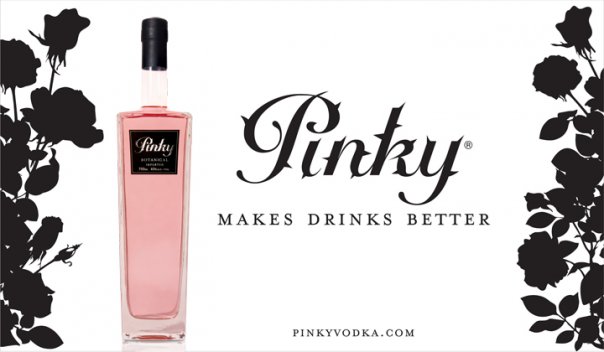
And as you see from the description, it contains Sipsmith and Pinky Vodka.  And this was all new to me.   The questions came thick and fast.  Pinky Vodka – is that a thing?  Yep turns out it is:


And Sipsmith?  Yep that’s a thing too - a kind of gin, apparently made from swans:


But even I know I’m not swan-worthy.