Monday, December 20, 2010

INTELLIGENT (AND VAGUELY SMUTTY) DESIGN


A weekend of curious potato-related convergences.  First, I was in a used bookstore in Yucca Valley and saw a copy of The Potato Book by Myrna Davis.  I was tempted but resisted because I thought it was too expensive, though I did stand in the store and read the (very short) foreword by Truman Capote.  Capote, by his own account, was not a great lover of potatoes unless they came baked, with sour cream and caviar, and unless he had a glass of Russian vodka in his hand; none of which would have been especially hard for him to arrange, you’d think.

But there’s a story told by John Richardson about the difficulty Capote once had finding baked potatoes for his lover, whom Richardson names “Jimmy N”.  The lover was a married, “nice, dim” refrigerator repairman from Palm Springs, enticed away from home, wife and job by Capote, then paraded around to Capote’s fancy friends, usually with disastrous consequences.


Richardson (that's him on the right above) entertained Jimmy N and Truman in Venice and found Jimmy, “No problem really, except for constant moans about the lack of air conditioning, comics, TV, above all baked potatoes. Every meal Truman would ask on Jimmy’s behalf for baked potatoes—he would describe exactly what he meant—‘in their jackets.’ Yet at every meal crisp little sautéed cubes would be served. Jimmy grew sulkier and sulkier. Finally I volunteered to scour the market for the nearest thing to an Idaho potato …”

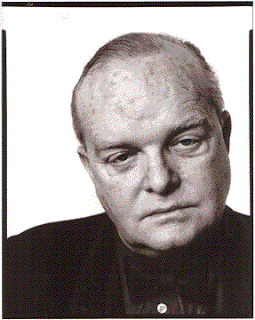
From Yucca Valley we drove down to the Palm Springs Art Museum (which used to be called the Palm Springs Desert Museum and had live desert scorpions on display – now gone, alas) where there was a terrific exhibition of photographs by Richard Avedon, including this one of Truman Capote.


Now, I know, the phrase “potato-faced” is perhaps a bit overused, but if ever I saw a man with a potato face, it’s Truman Capote in that picture.  Russian vodka may also have played a part in the overall effect.

We drove home afterwards and waiting in my email was an image of an unusually shaped German potato, or Kartoffel as they would have it.  Perhaps both Jimmy N. and Truman would have been happy with a potato like this.


Wednesday, December 15, 2010

DINING WITH DE SADE, MUNCHING WITH THE MARQUIS, SCOFFING WITH A SADIST, ETC. ETC.


If you’re really in search of food, sex, obsession and the madness of the mouth, why look further than the Donatien Alphonse François, Marquis de Sade?  Of course, most people don’t read de Sade for the recipes, as it were, but the divine Marquis saw an absolute connection between food and sex.

     He wrote, “Sex is as important as eating or drinking and we ought to allow the one appetite to be satisfied with as little restraint or false modesty as the other.”  Sounds fair enough, although he also added that, “Sex without pain is like food without taste,” to which most of us might respond, “Well, yes and no.”


    When de Sade writes about sex, he’s generally absurd: when he writes about god, nature, justice and all that, he becomes unreadable.  But just once in a while his writings turn into dark, fantastical, absurdist fables, like the section in Juliette when the heroine encounters the giant Minski, a Muscovite, also known as the Hermit of the Apennines.


Juliette and her traveling companions go along to Minski’s castle where he shows them his idea of fun.  Some of this is certainly food-related.  He tells the guests about his taste for human flesh. “Whoever tries this diet is certain to triple his libidinous capacities,” he reckons.  In the dining room the tables and chairs are made of contorted, live naked women, a la Allen Jones or rather vice versa.  Dinner is served by twelve naked girls, and as it arrives Minski obviously feels some need for self-justification and tells his fellow diners, “it is no more extraordinary, after all, to eat a human than to eat a chicken.”


     They tuck into a “joint of boy” and Minski downs 12 platters of the stuff; which presumably means many joints and many boys.  He drinks thirty bottles of wine with the first course, another thirty by the time the meal’s finished.  Then there’s a break for sex and murder, Sadism you might say, and then he decides to round off the evening with “mards, exquisite in form and exceedingly fresh.” “From the best asses in my harem,” he explains.  Juliette, who until then has been pretty much game for anything, excuses herself by saying, “an appreciation for these dainties is slow to come by,” and Minski takes it surprisingly well.  There’s lots more murderous libertinage, before Minski starts waffling on about the hypocrisy of hospitality, a discourse that goes on through the night until it’s time for breakfast, and Minski has “8 or 10 virgins-blood sausages” and eighteen magnums of Greek wine.  Neither Minski, nor de Sade, ever contemplated the notion that less is sometimes more.

Juliette was published anonymously in separate volumes between 1797 and 1801.  Napoleon ordered that the author of this outrageous text be imprisoned, and de Sade’s anonymity was insufficient to protect him.  He spent the last thirteen years of his life incarcerated, first in prison, then in the insane asylum at Cherenton

     Incarceration was not an entirely new experience for him.  He’d already spent fourteen years in prison, first in Vincennes, then in the Bastille, before the Revolution freed him.  He’d found the regime in Vincennes more or less tolerable, but in the Bastille he found much to complain about, not least the food.  And you can’t help thinking he complained a little too much.


According to Neil Schaeffer’s The Marquis de Sade: a life, meals were served in the Bastille at seven and eleven in the morning and then at six in the evening.  “The midday meal,” Schaeffer writes “might consist of a soup, an entrée and a meat dish of mutton, salt pork, sausage, or veal, plus one pound of bread, and a bottle of wine.  Supper consisted of two dishes, including a meat dish, perhaps of roast chicken or calf’s liver. “Clearly they are starving me to death here,” de Sade wrote to his wife.

Vincennes was different from the Bastille in that the former allowed prisoners to receive parcels from home, the Bastille did not, but after much protesting De Sade got his way, and before long his wife was sending him pates. terrines, chocolate, special jams, marrons glace, and what not.  He doesn’t seem to have been quite as grateful as he might have been.  Schaeffer tells us that prison records from June 1784 show he was provided, at least for a time, with cut flowers once a week, and fresh strawberries every day.

There were a couple of occasions in the late 1990s when I went to a place in New York, named La Maison de Sade; it closed in 2001.  It was, I think you’d have to say, a theme restaurant, that billed itself as an “S&M supper club.”


One surprising thing about the place was that it was right there on 23rd Street in Manhattan, close to the Chelsea Hotel, and anybody with enough nerve could walk right in off the street.  Even more surprising was that although there was a stage show that involved some willing slave being stripped and paddled, and various people wandering around in leather corsets, jock straps and dog collars, there were also a surprising number of what appeared to be just plain folk sitting at tables (that weren’t made of human bodies) eating perfectly ordinary three course meals.  In fact some of the people in corsets, jock straps and dog collars would turn out to be waiters and waitresses.

I seem to remember I just had a couple of drinks and some bar snacks, although unless I’m completely imagining it, there was a guy there celebrating his birthday and he got a birthday cake rubbed into his naked torso.  The marquis, I’m sure, would have found it all a bit vanilla.  


One of the de Sade ancestral homes was at Lacoste in Provence, a grim edifice in all the extant images, and poverty forced him to sell the place in 1796.  Since then, after much plundering, looting and neglect it’s been sliding steadily into ruin, with only occasional, not quite convincing, attempts at restoration.   But now I discover, a little belatedly, that the old de Sade pad has been bought and partly restored by Pierre Cardin, a man whose name appears inside my own overcoat. 


Cardin owns the Maxim’s restaurant chain, along with their range of food products, and in 2009 he was nominated as Goodwill Ambassador of the Food and Agriculture Organization of the United Nations, so clearly he has some interest in food. How much of a connection he makes between food and sex, I can’t say, but I do know what he’s done with the dining room in Lacoste, see below.  It really doesn’t look like a place where you could comfortably eat virgins-blood sausages.


Saturday, December 11, 2010

NUT JOB


And speaking of the madness of the mouth, I went to a Thai restaurant in Glendale, name of Sedthee, which in fact calls itself an “eatery.”  I was there for lunch.  They claim to do a six dollar lunch, but the menu is so hard to understand that I think very few people know exactly what they’re ordering and it’s absolutely guaranteed to be more than six dollars.  Then again, who really thinks they’re going to get a restaurant lunch for six dollars? 

The place is very modern and airy and designed, and absolutely cavernous, though you don’t realize that at first.  And on the menu was something called “fried nut case.” Who could resist?


I did worry I might end up with a plate of fried peanut shells, but when the mystery ingredient turned up it looked like, and I think actually was, cashew nuts, and they weren’t in their shells.  It also turned out that, more or less unknowingly, I’d ordered them mixed in with seafood.  They looked like this: 


They were perfectly good, in a Thai lunch kind of way, but the best part was they allowed me to say afterwards that I’d had a nut case lunch: a small but real pleasure.

Oh, and another curiosity of the Sadthee, after we’d ordered, without actually specifying what kind of rice we wanted, the waitress came back to say they’d run out of white rice, and would brown rice be OK?  Of course, it was fine, but a Thai restaurant that runs out of white rice, seems a very odd one indeed.

Wednesday, December 8, 2010

A MILLION AND ONE SANDWICHES


For years now, I’ve been saying to anyone who’ll listen, though chiefly to editors, publishers and agents, that what the world needs is a grand, majestic book about the sandwich.  I’m not talking about some jaunty “celebration” of the sandwich, but an authoritative cultural history, a great tome, 500 or 600 hundred pages long, dealing with the sandwich in all its forms, manifestations and meanings, a book that deals with the sandwich in history, art and literature, the sandwich as a means of self-expression, as an agent of western imperialism, sandwiches in space, Charles Lindbergh’s sandwiches, the Quaalude sandwich Ron Wood gave to his wife so she’d pass out and he could turn his attentions to another woman, the sex sandwich; and much else beside.


This great idea of mine has largely fallen on stony ground.  But recently I discovered that Bee Wilson had written Sandwich: A Global History, part of the Edible Series, published by Reaktion Books.  Of course my first reaction was to be all bitter and twisted about it, but having read the book, I feel much less than way, not least because the book is much less grand than the title, running to fewer than 150 small pages.  But to be fair to Bee Wilson, she covers a lot of ground in that short text.


She starts by gamely trying to define what a sandwich is, and concludes that a sandwich demands enclosure.  This means that wraps, pita bread, and possibly even a burrito, come within the definition but she reckons an open sandwich, which isn’t really a sandwich at all. 

I think she’s got a point, but it’s a tricky one.  I remember on my first trip to the United States I went to a diner close to the bus station in San Francisco and ordered a turkey sandwich.  I still recall my amazement and pleasure at finding it came open-faced with mashed potatoes and gravy.  It also seemed somehow indecent.  I certainly had the sense that it wasn’t true a sandwich.  On the other hand I never had that feeling with a Danish smørrebrød.


Bee Wilson is really good on the history and development of the sandwich.  Much of this is well known of course (Rabbi Hillel et al), but she’s tracked down a possible mention of a poisoned sandwich in an anti-papal tract of 1571, titled Spiritus est vicarious Christi in terra, which strikes me as a brilliant bit of research.  And I very much like her parsing of the banh mi, and its transmission from French culture to Vietnamese to that of the United States.


But perhaps inevitably the most enjoyable parts are when she digs out some curious old cookbooks that contain notions of (and recipes for) the sandwich that are a very long way from our own.  She mentions a 1933 book with the title Something New In Sandwiches (that’s its stunning jacket above) which has a recipe for a double-decker sandwich called “High Finance” containing a layer of ham in gravy, above a layer of sheep’s brains and parsley.  There’s the Gentle Art of Cookery (1947) with a recipe for rose petal sandwiches, which I think must surely have been a rather spirited and slightly decadent response to post-war British austerity: rose petals weren’t on ration after all.


She also mentions the books of Florence A. Cowles; who first wrote her book Seven Hundred Sandwiches in 1928, which (I think, the bibliograhpical details are confusing) was subsequently published in England in 1929 as Five Hundred Sandwiches; I guess the English publisher thought 500 was plenty.  Then in 1936, she really went for it and published a new edition as 1001 Sandwiches.  I just ordered the last of these from Abebooks and can hardly wait for it to arrive.  I’m not sure if she just added new recipes to the old ones or whether there was some ebb and flow.  Bee Wilson describes a recipe from the 1928 edition for peanut butter and cabbage sandwiches.  I sure hope that’s in my copy.


Incidentally, Bee Wilson mentions the cucumber sandwich scene from The Importance of Being Earnest.  “Algernon,” she writes, "expresses horror that there are no cucmber sandwiches for tea …  The truth is he has eaten them all without noticing.  Lane, the butler, has to explain ... ‘there were no cucumbers in the market .. No sir, not even for ready money'.”  I’ve always assumed this was a downright filthy single entendre about the phallic properties of the cucumber, and the unavailability of bought sex; but then I would, wouldn’t I?


She’s more comfortable with the notion, accurate enough, that sandwiches are class indicators.  The upper crust eat dainty little sandwiches, the lower ranks eat doorstops. I’m not sure that’s absolutely true.  I suspect daintiness is actually an attribute of the aspiring middle class.  I suspect most toffs enjoy a big fat sandwich as much as most working men.

I once worked briefly in a bad restaurant with pretentions, and one lunchtime the manager commanded me to make a cheese sandwich for a customer.  This wasn’t on the menu but I didn’t think it was much of a challenge, and knowing nothing about anything, I produced a vast, and admittedly not very pretty sandwich.  The manager took one look at it, pushed me aside, took a sharp knife and resliced bread to a half of its thickness and did the same with the piece of cheese.  He reassembled the sandwich and scattered it with watercress and sauntered out of the kitchen satisfied that he’d made an “elegant” sandwich.  I was duly humiliated, but the bloke who did the washing up, turned from his sink, gave me a look of sympathy and said, “Typical of this fucking place.”  And he was quite right.


So anyway, Bee Wilson’s book is a good and useful volume, and having read it I now feel, not so much bitter and twisted as vaguely relived.  The great sandwich book still needs to be written.  Sometimes I even think I’m the man to write it.


Tuesday, December 7, 2010

POTATOES ARE NOT THE ONLY FRUIT


One of the less explicable things I do when I’m in England is visit small parish churches. They move me in all sorts of ways that I don’t altogether understand. When I was in Essex a couple of months back I visited Greenstead Church near Chipping Ongar, a fine ancient wooden structure.  That's it below.


Inside it was the harvest festival, when churches display nature’s bounty around their altar.  I don’t know if things are especially tough in Chipping Ongar, or whether nobody was really trying, but the display looked humble to say the least. See below, and click on it to get the detail.


There’s a pack of leeks that looks like it came straight from the supermarket, and the bag of potatoes that takes up most of the chair doesn’t look as though its contents have come straight from the fields.  But at least the potatoes are there in quantity.

Of course there’s nothing wrong with potatoes in church.  Some people have claimed that the potato is the forbidden fruit of the good book.  They base this around the fact that the potato isn’t mentioned in the bible.  That may well be so - I admit that my knowledge of the bible is patchy - but I don’t recall any references to kumquats and kiwi fruit either.  Maybe they’re equally forbidden.

I was thinking about this last week when I went out to lunch at the Lady Ox Canteen, in downtown LA.  I don’t go out to lunch very often so when I do I always want it to be a special event.  And because I’ve been thinking about Don DeLillo lately I was reminded of a passage in his novel Libra when a couple of shady operators have lunch in the Occidental Restaurant in Washington DC, which I thought sounded totally fictional and made up, but turns out to be perfectly real.  DeLillo writes, with how many layers of irony I leave it to you to judge, “There were times when Larry thought lunch in a superior restaurant was the highlight of Western man.”


I think Larry has a point.  The Lazy Ox is a superior, grown up restaurant, though I don’t think there were any CIA in that day.  I ordered something I’d never had before, actually two things:  first, shoulder of veal (and sure, I’m not proud of myself for eating veal), but it was pretty wonderful, and it came coated in the darkest, richest, winiest sauce.  And underneath it, and I’d never had this either, at least not by this name, was pee wee potato salad.


Now, I know I don’t get out much but I really had never heard of pee-wee potatoes.  Certainly they were small, what I’d have called “new potatoes” in England back in the day.  And they very perfectly good, but I really hated that name.  “Pee wee” it sounds so infantilizing, bringing to mind tater tots and Pee Wee Herman; both perfectly OK in their place, but I’m not sure either of them is a highlight of Western man.

And as I ate my potato salad at the Lazy Ox, wishing I had a little more of it, I started thinking about those faked postcards, more often than not from Idaho, that show giant, monstrous potatoes on the back of trucks or railway wagons, like this:


That’s what a potato should be.   And then, imagine my joy when I discovered first, that there’s such a thing as the Idaho Potato Museum, in Blackfoot, Idaho where they have a giant Styrofoam potato that’s as tall as a man.  There motto: "We give taters  to Out-Of-Staters."


But far more impressive (and which I discovered via the wonderful website RoadsideAmerica.com) is the Spud Drive-In, in the town of Driggs where they’ve recreated one of those postcards, life size (as it were).  Like this:


Pee wee?  I don’t think so.

Monday, December 6, 2010

THE ROAD TO SPUDVILLE


A man by the name of Chris Voigt (above) has spent two months eating nothing but potatoes.  This was, frankly, a rather cheap publicity stunt.  Voigt is head of the Washington State Potato Commission and he was protesting about the US Department of Agriculture rules that don’t allow recipients of food vouchers under the Women, Infants and Children (WIC) program to use those vouchers to buy “white potatoes.”  Sweet potatoes and yams they CAN buy.

As protests go it was pretty self-serving.  He just wants people to be able to use the vouchers to buy his spuds.  The WIC voucher program is intended to encourage recipients to eat a more varied set of healthy vegetables.  By and large they don’t seem to need any federal encouragement to eat a lot of potatoes.

Still, Voigt proved, what many of us have never doubted, that it’s possible to live on an all-potato diet.  Potatoes contain proteins as well as starch, and with their skins on they’re a source of vitamins, minerals and fiber.  The problem is that these things are only present in small quantities and therefore you need to eat a heck of a lot of potatoes to get your daily doses.  Of course, not everybody would regard this as a problem.  Voigt ate 400 pounds of potatoes in two months, call it six and a half pounds a day, and if the reports are to be believed, he lost weight and reduced his blood sugar and cholesterol.


By some accounts that level of potato consumption is pretty much what the peasants were eating in pre-famine Ireland.  The historian Austin Bourke says that in farming communities each person ate a ton of potatoes a year (2240 pounds), which is a little more than six pounds a day; though in fact I’ve seen estimates of double that.  Bourke also reckoned that 40 per cent of the Irish population weren’t eating anything other than potatoes.

My own Irish ancestry ensured that as I was growing up, potatoes were eaten at every main meal, and my dad would go to a local farm and buy potatoes in hundredweight bags.  Old habits and cultural associations die hard.  Yes, I eat rice and pasta, but they don’t seem like real food in the way that potatoes do.  A part of me still thinks a “proper” meal has to involve potatoes.

I’ve found it very hard to find rock solid data on contemporary potato consumption in Ireland, but I’ve found one source that gives a figure or 300 pounds per person per year.  That’s considerably higher than the US or Britain (120 and 225 pounds respectively), but it’s a good way behind the worlds’ number one potato-consuming country, which is – wait for it – Belarus: 399 pounds.  Here are some Belarus potatoes being harvested.


Most of what I know about Belarus comes from my friends Steve who’s involved with a charity that takes children from Belarus over to England for a few weeks at a time, to show them (I guess) the advantages of late period capitalism.  Steve tells me that one of the girls started every meal (regardless of its size and content) with two slices of bread covered in tomato ketchup.  Her motto was, "If you eat bread, you are never hungry."  Although surely the same would apply to potatoes.

I don’t know if you’re familiar with the American Potato Journal.  I can’t say that I am especially, but I did track down a copy from 1928 containing an article by John Harvey Kellogg, the Medical Director of the Battle Creek Sanitarium (yep, that's how he spelled it), the begetter of the cornflake, and subject of the novel and movie, The Road to Wellville.  That's him below talking to George Bernard Shaw.


You might assume that Kellogg would champion cereals above all else, and yet here he is in the journal, author of an article titled "Why We Should Eat More Potatoes."  “In this country we have not yet begun to appreciate the value of the potato as an article of food,” he writes. Apparently what’s so great about the potato is that it’s acidic and this counteracts the body’s alkalinity, making life easier for the kidneys; and this is a a very good thing.

His evidence, he says, is right there for all to see.  In 1928 America centenarians were rapidly disappearing, whereas “Potato-eating Ireland furnishes more examples of great longevity than any other European country except Hungary.”  QED.

Tuesday, November 30, 2010

BEEF


There was a curious recipe and rumination in Sunday’s “Parade” magazine, by Maya Angelou.  It was there to publicize her new book Great Food All Day Long.  It came under the headline Simple Pleasures and began with an anecdote about the time when she was visiting professor at Wichita State University for four weeks.  This must have been in 1974.

She says she was staying with family friends and “elected to cook some special dishes for them.”  These included beef bourguignon, beef Stroganoff and curried lamb with mango chutney.  She says the adults enjoyed the dishes, “but my friend’s two daughters could barely choke them down.”


Then her husband Paul came to visit, a non-cook in general, but he’d learned to make two things in London, one was bubble and squeak, and the other was something called “London grill” which he duly made for his hosts.  Now, if anybody in England has ever used the term “London grill” they certainly did it while I wasn’t listening, but then the actual name of the recipe is “Mixed London Grill,” and mixed grill is something we British do know about.  Maya says London grill is just “different meats cooked with onions.”  Well yes, up to a point.  But things are complicated here, because when the British say “grill” they mean what the Americans mean by “broil.”  The Angelou recipe involves cooking everything in a “grill pan on stove top” which the British would call “frying.”  But in a way none of this matters, because, she says, Paul served it up and “the girls were just over the moon about these grilled things.”


She then gives the recipe, for twelve people. That's a picture above of the finshed article.   As well as lamb chops, pork loin, sirloin, veal and bacon, it also includes one bratwurst or other sausage, and then lamb or veal kidneys and two pounds of calves’ liver.  The recipe also comes with the instruction, “Be careful with portions.”

Now, I’m no expert on the culinary tastes of young girls in Wichita in the 1970s, but I think that  if these girls really rejected beef bourguignon in favor of  kidneys and liver, then they must have been very unusual girls indeed.


And what’s especially interesting about this story and recipe, is that the Paul in question was Paul Du Feu, (sometimes spelled Paul De Feu, at least online) who’s one of those extraordinary footnotes in literary and sexual history.  As well as being married to Angelou, he’d also been married to Germaine Greer for three weeks in 1968, and who was the first nude(ish) centerfold for British Cosmo, which was regarded as quite a sexy magazine at the time.


The biographies variously have Du Feu as Australian, French or British, and as a construction worker, cartoonist and journalist.  I suppose it’s not inconceivable that he was all these things.  Stories of his culinary expertise had passed me by till now, but a chef who could make picky Wichita girls eat liver and kidney?  Truly the man was a god.

A couple of years back The Daily Mail, in order to mock Germaine Greer tracked down Du Feu, to “a rundown district of California,” which turned out to be Berkeley, where he grew tomatoes, and he repeated his assertion that the marriage ended basically because Greer was a slut.

Only a fool would cross Germain Greer, and she duly responded in the Daily Telegraph.  “When he met me,” she wrote, “he was only recently discharged from the hospital where he had been treated for alcoholic poisoning.  For the first part of our acquaintance, which was strictly at weekends, he soft-pedalled on the booze. He suggested marriage, I made certain conditions that he appeared to accept, but by the time I was on the train down from Coventry heading for the register office, I knew I was in deep trouble.  When the waiter on the train asked me why I looked so sad, I said: "I'm going to marry a drunk," and burst into tears, so he gave me a free bottle of Liebfraumilch to cheer me up. I was so miserable that I drank it."


In a move that suggested Germaine hasn’t entirely got over a fondness for difficult men, she appeared on Gordon Ramsay Cookalong Live. competing against him in a “1970s recipe challenge.”  They both cooked duck a l’orange.  She lost, though I thought hers looked perfectly good, and in the course of cooking she did make the wonderful foodie, feminist remark, "A healthy girl is a fat-bottomed creature."       

I’ve been looking for a similar sentiment in Maya Angelou and haven’t been able to find one, though there was a legendary interview she did with Gary Younge of the Guardian, in which she told him he was fat and suggested he pay more attention to the size of his portions.  Just like she suggested we do with her London grill.

Wednesday, November 24, 2010

FAILED ATTEMPT TO PUN ON JELL-0 AND DELILLO


One or two ongoing thoughts about jelly and Jell-O, specifically about how they get advertised and sold.  Now, we all know that the images on packages and in cookbooks never bear much relation to the way food actually appears when we eat or make it.  But jelly takes things to a whole other level.  My roasts don’t look as good as Jacques Pepin’s but they seem to come from more or less the same planet.  Not so with jelly.


I’m really taken with the Rowntree’s ad above.  It suggests a standard of fine living and elegance that is surely beyond most jelly eaters, and of course has nothing whatsoever to do with real life.  Were domestic servants ever really that skilled with jelly?


I’m equally amazed by the Jell-O cookbooks I see for sale in American antique shops. Yes you could perhaps, given enough time and determination, a team of helpers and just the right molds, come up with something that vaguely resembled the stuff displayed in these books, but you just wouldn’t, would you?


Maybe it’s just very hard to know how to advertise and sell jelly.  Since the mid-1970s – with gaps - Bill Cosby has been the face of Jell-O in America.  He seems an unlikely spokesman, but it’s hard to think of anyone who’d be a better fit, certainly from that period.  Goldie Hawn? Mel Brooks?  Bruce Dern?


Oh, and if you’re inclined to reply to the rhetorical question in the ad above that neither the Jell-O nor Cosby’s shirt is in any way cool, well, then you’re just a cynic.


Sometimes the Jell-O imagery can get completely out of hand. I’m not even sure what’s going on in the picture above (you'll probably need to click on it).  Have the people in the cabin left the Jell-O outside because they have no fridge and the cabin’s too warm?  Or have they left it outside as a peace offering to the bear?  If it’s the latter then I fear the worst.  Once a bear’s got a taste for animal collagen then he’s coming inside the cabin and you’re next on the menu.  Bears don’t worry too much if they eat their dessert before their meat course.


And finally, just in case you thought jelly was an innocent and frivolous pleasure – and Ok if you’re reading Psycho-Gourmet then you probably don’t think that for  moment – but anyway, here’s a passage by Don DeLillo, not a name that’s exactly synonymous with innocence or frivolity.  It’s from his novel Underworld, though it appeared as a short story in the New Yorker, titled “Sputnik.”


The passage runs, “She remembered coming home one day about six months ago and finding Eric with his head in a bowl of her antipasto salad.” We’ve already established that she makes a fine antipasto Jell-O salad.  “He said he was trying to eat it from the inside out to test a scientific theory of his … But she didn’t believe it.  She didn’t know what to believe.  Was this a form of sexual curiosity?  Was he pretending the Jell-O was a sort of lickable female body part?  And was he engaged in an act of unnatural oral stimulation?”


Now, that might be a good way to advertise the stuff