Thursday, May 30, 2024

BLUE ROADS

I can’t remember when I first heard of Jane and Michael Stern: it seems like they’ve always been there.  Their book Roadfood  was first published in 1977 and has been much updated, and they had various columns in food magazines, and I believe still do. This was them back in the day.


Their original idea was brilliantly simple – they drove around America, originally in a Volkswagen Beetle, eating in ‘ordinary’ American roadside restaurants, and writing about it.  Sounds like a plan, doesn’t it?


They also wrote a book titled Blue plate specials & blue ribbon chefs: the heart and soul of America's great roadside restaurants.  Now that phrase ‘blue plate special’ is about as all-American as it gets, and as far as I can tell as a non-American, it refers to specials served in cheap and cheerful eateries around the States.


I’m not sure that these meals were always served on actual blue plates but some undoubtedly were, and sometimes the plates were segmented – perhaps in the interests of portion control. 


The term seems to date from the very end of the  nineteenth century, at Fred Harvey Restaurants, usually found in railroad stations.  It also seems to have something to do to do with willow pattern plates.  My grandmother had a couple of those but we never ate from them – they were wall decorations.


All this has been on my mind since I recently bought a couple of low-priced blue plates from the local Asda.  


In general I’m in favour of plain, simple white plates, but you know, I discover that most things look pretty darn good on these blue numbers.  That's snapper and samphire, if you're interested.


Photo by Caroline Gannon

And then, synchronicity being what it is, I was looking at Fuschia Dunlop’s posts on Instagram and up popped this fabulous picture of a table centerpiece at a dinner she was at, I think in Beijing. Looks great to me. 


Yep, blue is the colour!


Oh and incidentally, my pal Sue Hutchins tells me that she's a big fan of blue plates and directs me to this fine example - a blue (and white) plate with a dodo!  Oh my.


Wednesday, May 22, 2024

ACID MOTHERS DIGESTION

 We went to Chelmsford, the inamorata and I, to see Acid Mothers Temple (the greatest Japanese psychedelic trance band in the world, and therefore definitely in Chelmsford) at the Hot Box, a fabulous venue with a capacity of 90 people, in the railway arches by the railway station.


It did occur to us that we might eat some Japanese food before the gig but in the end we went to the Brew House and Kitchen and ate nachos and salt and pepper calamari.  I don’t think makes us bad people.


Photo by Caroline Gannon


 And the gig was all we wanted to it to be.  This kind of thing.


And afterwards we rolled a few hundred yards from the gig to the budget hotel we’d booked into and slept the slept of the just, the transcendent, and the slightly deafened and beered-up.


But next day on the way home I spotted, actually within the railway station itself, the Ume Garden's Sushi and Bento, 


and in the interests of completing the cultural experience, I bought a box of something named Rainbow Set (Nori, Rice, Vinegar, Salmon, Prawn, Tamago, Inari, California Roll, Prawn Avocado Roll, Cucumber) and took it home and had it for dinner.  Looked like this, and tasted good enough.


Was it ‘authentic’?  I suppose not altogether.  But following Acid Mothers Temple on Facebook I see they often cook in their hotel room (not the same budget hotel that we were in, evidently) using a portable hot plate, and sometimes cooking rice in an electric kettle: 


And sometimes apparently it’s necessary for them to put a tent over the whole thing, which I suppose is to stop the smoke alarm going off.


Ah, life on the road.


Monday, May 13, 2024

THE TASTEBUDS OF THE BEHOLDER

 Don’t stop me if you’ve heard this before, but many years ago when I worked Mondays at the Bath Hotel in Cambridge as ‘relief chef’ (a massive exaggeration of my capabilities), the manager said to me, ‘If they’ve got a full plate and it looks good you can get away with murder.’ I wasn’t trying to get away with murder, and his idea of a good looking plate was one strewn with handfuls of cress, which even then I thought was a bad idea, but even so I could see the guy sort of had a point.


Now, for one reason or another I have lately eaten sandwiches in a couple of Costas. (I had my reasons). The presentation, let’s call it that, is varied, sometimes on a plate, sometimes on a paper bag, which is not exactly stylish, but even so I thought the sandwiches themselves looked pretty decent, mostly because of the melted cheese on top.


But what was inside tasted pretty awful. Yes, we eat with our eyes, but we don’t completely eat with our eyes. Once the food gets into your mouth a quite different sense takes over.


Which brings me to toad in the hole. Now, I like to think I make a fairly decent Yorkshire pudding.  I learned how by watching my mother make them at least twice a week.  She never actually taught me how to do it, that would have been far too metrosexual: I just watched and absorbed.


My mother never made toad in the hole, but since I like both sausages and Yorkshire pudding I thought I was on reasonably safe ground making it.  And I more or less was.  The sausages were from the local butcher, my batter was up to my usual standard but when it was cooked it didn’t look pretty, even if it tasted just fine.


I had a couple more attempts without any great visual improvement


And then I started hunting around online and you know, ALL the toad in the hole looked fairly ugly, whether it was the BBC:


Tesco: 


or even dear Jamie Oliver:


I don’t hold this against any of them, and of course I understand there’s more to food than it being photogenic.  Thanks to Instagram everybody and their uncle thinks they’re a food photographer but I recall an occasion when I was being a ‘real’ food journalist and I went up to Yorkshire for the Daily Telegraph to interview some people who made soup (the company name long forgotten), and I was there with a real food photographer, whose name, I’m sorry, also escapes me. The day went well, the soup people were very hospitable, the interview went well, and by the end of the afternoon I’d got everything I needed and went off to my hotel (yes, the Telegraph was paying).  But the photographer and his assistant toiled on,adjusting the composition, changing lighting, rearranging props and garnishes, photographing soup from all angles and showing no sign of letting up.  They looked like they might be there for the rest of the night.

I can’t immediately lay hands on a copy of the article but I do have a Polaroid that I was allowed to take away as a souvenir.  This:


Wednesday, May 8, 2024

THE RAW AND THE UNPALATABLE


Here’s a culinary idea.

Supposing you had a couple of duck portions in your fridge and you couldn’t be fussed to do all that time-consuming roasting, baking, crisping, confiting or whatever, well you might think to yourself, ‘I know, I’ll make duck tartare.’  I mean, I’m very fond of steak tartare, red meat is red meat, and there are plenty of recipes online saying this is a very good thing.


So we did the chopping, the seasoning, the adding of onion, capers, cornichons, mustard, chives and whatnot, and served it on crostini with rocket leaves.

It tasted OK but the texture was a bit slimy on the tongue and it looked vaguely disgusting, like this:


I didn’t say it was a good culinary idea.


Tuesday, April 30, 2024

MUCKING UP THE BOOKS


There was a great article in the LA Times by Laurie Ochoa (that’s her above, about a million years ago, with Mark Z Danielewski), headlined, ‘If the world has gone digital, why do so many of us still want cookbooks?’ I don’t have an answer to that but I know it’s true in my own case.


Laurie quotes Kate Gibbs of the Guardian, ‘Cookbook sales in the U.S. grew 8% year-on-year between 2010 and 2020, with sales numbers boosted even further by the pandemic.’ Which is slightly, though entirely, surprising.


Laurie also writes, ‘A well-loved cookbook is a well-worn cookbook. We shouldn’t be afraid to get our cookbooks dirty.’  And that may be true but even so I try to keep my cookbooks cleanish, though of course there are exceptions.


But here’s a thing, I obtain a lot of my food (and drink) books secondhand, and honestly I don’t want the pages stuck together by somebody else’s failed attempt at onion gravy.  My own failed gravy I can live with.


However, with most of the books I buy this isn’t much of a problem. I would guess that a high percentage of the volumes you find in used bookshops, and especially in charity shops, have been given to people as presents.  Not only have these books not been read and cooked from, in many cases they haven’t even been opened.


Here are some of my more or less recent acquisitions: the priceless Ginspiration, bought at a local church sale, yep, I'll go anywhere for a used book:


Jonathan Meades’ The Plagiarist In the Kitchen – reader, it cost 25 pence.  Sorry Jonathan.


And here are some from the past, both bought at the same, now closed, local charity shop. Cocktails With Bompas and Parr


Yep, I made the tentacle martini (op cit) and managed not to spill gin on the pages.


And the Book of St John – if you need a recipe for grilled ox heart with beetroot and pickled walnuts, where else are you going to look?


And of course there is Apicius, mine is a 1958 edition and new translation.  


I’ve never made anything from it, and judging by its condition neither has anybody else.  But that’s not surprising: you have to go a long way before you find somebody who needs a recipe for stuffed dormouse.


Monday, April 29, 2024

SCONES WE HAVE KNOWN


According to Alan Davidson’s Oxford Companion to Food, the word scone was originally a Scottish word, possibly derived from ‘schoonbrot’ or ‘sconbrot’ which means fine white bread.  I think this information comes from the QED.  The Oxford Companion also says ‘The pronunciation of the word shows a distinct regional divide, being “skon” in Scotland and northern England, and “skoan” in the south.’


Well … as a lad from Sheffield I can tell you there’s at least one place in the north where we always said ‘skoan’ and it was only when I moved away from Sheffield that I had any idea anybody pronounced it any other way.


Pic by Caroline Gannon, of course.

My mother who was a plain cook, and proud of it, made scones from a packet mix, and they were very plain indeed, and we ate them plainly with butter but never with jam or cream.  I can’t tell you what brand of mix she used, but we can be absolutely certain it wasn’t ‘Snowflake.’


The first job I had after university was working behind the counter in a local caff, and they sold CHEESE SCONES!!  – it was a revelation.  And a welcome one.


Today, I can’t say I’m the biggest scone fan in the world but looking through my picture archive I see I’ve scoffed quite a few in recent times, most often when out and about of an afternoon and not fancying a sandwich.

    Here’s one for example eaten in the Millenium Galleries in Sheffield in recent times, long, long after I stopped thinking of myself as a Sheffielder: 


And the fact is, most scones that you buy and eat are pretty much OK.  It’s rare to get a really bad one, just as rare to get a transcendentally good one.  I suppose that means it’s a ‘safe choice.’


Here’s one from Hardwick Hall in Derbyshire:


Here’s one from Nature in Art in Gloucestershire, where I had a conversation with the gal behind the counter about pronunciation:


 Here’s one from the basement café in Waterstone’s bookshop in Piccadilly:


Here’s a somewhat fancy one from the caff at Two Temple Place in London, containing olives and onion and served with slices of cheese and a garnish of salad.  I don’t believe I’ve ever eaten another scone with salad.


And then my eye was caught in the caff at the local garden centre by a cheese and hazelnut scone.  Yeah, it came with onion relish! It sounded great.


And it and tasted ok – very big, slightly dry, and in need of more cheese and more nuts, if you asked me; but this is evidently not a universal opinion.  The caff was displaying this notice:


You can’t argue with that can you? Well I mean, you can, but why would you want to?

Monday, April 22, 2024

SEEM TO BE GETTING THE HANG OF THEM SCALLOPS

Helped by the somewhat elegant plate bought from the local charity shop part of an 'Eastern Dining Set' (whatever).


Photo by Gannon Studios (who else?)

Monday, April 15, 2024

SOMETHING ABOUT A MARTINI


A friend of mine, admittedly an American friend who perhaps had unreasonably high expectations, went into the bar at Euston station recently and asked the barman for a Martini.  He didn’t know what that was or how to make it, so my friend settled for a negroni, which was within the barman’s wheelhouse.


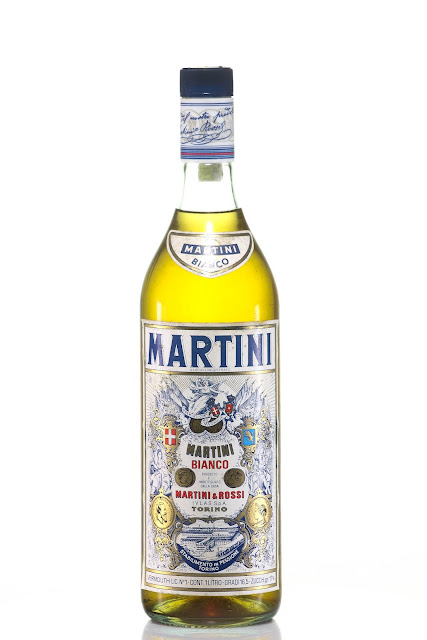
I think she was lucky that he didn’t just pour her a glass of ‘Martini.’  For many, many years very few people in England knew what a martini was, but they’d heard of Martini Bianco which was, and is, the trade name of a brand of vermouth made by Martini and Rossi.  I’ve always wondered whether they were deliberately trying to cause confusion.


And then last week in the Times, in the Comment section, Rose Wild (possibly her real name) quoted from an essay published in the Times in the summer of 1914, titled ‘Thoughts on Drink.’ The relevant passage runs ‘A wise man of the world has laid down as a law of universal application that “Whenever you want a drink and don’t know what drink it is that you want, what you want is vermouth."’


I suppose there must have been one or two occasions when I didn’t know what drink I wanted, but it’s a rare thing; and just as rarely have I ever wanted a glass of vermouth.


We come back, as so often, to the first verse of Ogden Nash’s poem, ‘A Drink With Something in It.’


There is something about a Martini,
A tingle remarkably pleasant;
A yellow, a mellow Martini;
I wish I had one at present.
There is something about a Martini,
Ere the dining and dancing begin,
And to tell you the truth,
It is not the vermouth—
I think that perhaps it's the gin.


How right he is.  It’s not, it’s never, the vermouth.